
Is your farm covered?
Pūkeko Signals uses the One NZ NB-IoT network - built for rural connectivity.

Check coverage for your farm
Use the One NZ coverage map to confirm 4G or NB-IoT reaches your location. If 4G is shown, NB-IoT is available on the same tower.
Check the One NZ coverage map ↗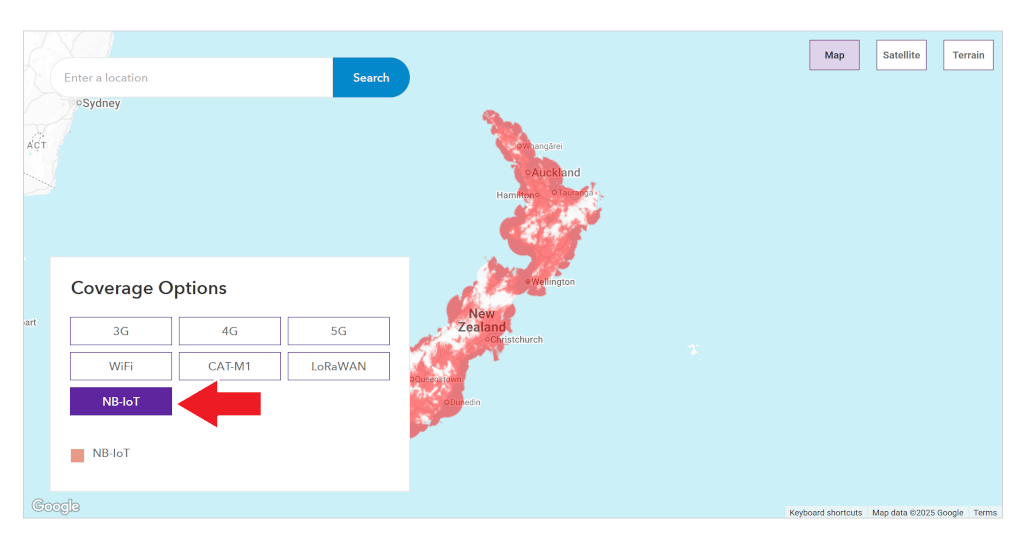
Click to enlarge. Coverage shown is indicative - actual signal can vary based on terrain and tree cover.
What is NB-IoT?
Unlike standard 4G, NB-IoT prioritises signal penetration and range over speed, making it well-suited to remote sensors that wake briefly to send a reading then sleep again.
Better rural coverage
NB-IoT signals travel further and penetrate terrain better than standard mobile data, making it practical on hill-country farms where standard data signal falls short.
Designed for low power
The network protocol is built to let devices spend most of their time in a low-power sleep mode, waking briefly to send a reading then immediately sleeping again.
A long-term investment
One NZ are actively expanding NB-IoT across rural NZ. Sensors using this network will benefit from future coverage improvements without any hardware change.
No WiFi or power needed
Your sensor connects directly to the cellular network. No need to run power cables or WiFi repeaters out to the pump site - just solar and signal.